
60 shadow work and self-reflection journal prompts for quiet nights
9 min read · Updated · Khram
Sixty questions, grouped so you can find the one you need tonight. Take one. Write for ten minutes. Leave the rest for another night.
How to use these prompts
- One prompt per session. Going deep on one question beats skimming ten.
- If a question stings, that's information, not a sign to push harder. Mark it and come back when you have more room.
- Write the first honest answer, then ask yourself “and under that?” once.
- Date every entry. Patterns show up over weeks, not single nights.
New to this? Start with shadow work for beginners, which covers a simple 10-minute routine and when to stop.
Noticing what you hide
- What feeling do I tend to hide, even from the people closest to me?
- What do I usually say instead of how I really feel?
- Which topic do I change the subject on, every time?
- When did I last cry, or almost cry? What was happening?
- At what point in my day do I go numb?
- If my body could talk about this week, what would it complain about?
- What am I pretending not to know?
Overthinking
- What conversation am I still replaying? What do I wish I'd said?
- What am I afraid people think of me right now? What evidence do I actually have?
- Which worry has been with me the longest? How old was I when it started?
- What decision am I stuck on, and what would “good enough” look like?
- When my mind races at night, what does it usually race toward?
- What would I tell a friend who kept thinking the thought I keep thinking?
- What am I trying to control that isn't mine to control?
- If I let this worry rest for one night, what am I afraid would happen?
People-pleasing and boundaries
- Who do I find it hardest to say no to? What happens in my body when I try?
- What did I agree to this month that I didn't want to do?
- Whose mood do I watch most closely? Since when?
- What do I believe will happen if I disappoint someone?
- Where do I give more than I get back?
- What boundary have I set and then quietly taken back?
- What would a kind, clear “no” sound like in my own words?
- Who in my life respects my limits without me having to explain them?
Anger and resentment
- What made me angry this week that I didn't say out loud?
- How was anger handled in the house I grew up in?
- Who do I still resent? What did I need from them that I didn't get?
- Where does anger sit in my body? What does it want me to do?
- What do I do instead of feeling angry: clean, scroll, apologize, go quiet?
- Now that I can name what made me angry, what would be fair to ask for?
- Which “small” thing keeps bothering me? What bigger thing might it stand for?
Envy and the golden shadow
Jung's shadow isn't only the dark stuff. People also disown good qualities, like confidence, ambition or playfulness, that weren't welcome at some point. These are sometimes called the golden shadow, and envy is often the clue.
- Whose life do I envy right now? What exactly do I envy?
- What does that envy tell me I want for myself?
- What trait in other people irritates me most? Where might it live in me?
- Which compliment do I brush off every time?
- What talent or interest did I give up because someone laughed at it?
- Who do I admire, and which of their qualities am I afraid to claim?
- What would I try if I didn't need to be good at it?
Inner child
- What did I need most as a child that I didn't get enough of?
- What was I praised for growing up? What was I quietly punished for?
- Which family rule do I still follow without thinking?
- What did I learn about crying, needing help or asking for things?
- What did I love doing at eight years old? When did I stop?
- Write a short letter to yourself at the age when things got hard.
- What does the younger me need to hear from me now?
- What can I give myself this week that I wanted back then?
Relationships and attachment
- When someone takes a long time to reply, what story do I tell myself?
- What do I do when I feel someone pulling away?
- In relationships, am I more afraid of being left or of being trapped?
- What pattern keeps showing up in my relationships, even with different people?
- What did I learn about love from watching the adults around me?
- Who do I feel most like myself with? What do they do differently?
- What do I need from a partner or friend that I've never said out loud?
- Where do I lose myself in relationships?
Self-worth and the inner critic
- What does my inner critic say most often? Whose voice does it sound like?
- What would I have to achieve before I'd feel “enough”? Who set that bar?
- When did I last feel proud of myself, even quietly?
- What mistake do I keep punishing myself for?
- What would I forgive in a friend that I won't forgive in myself?
- What is one true, ordinary good thing about me?
- If I believed I was enough tonight, what would I stop doing?
When to put the pen down
Some questions open more than you expected. If you feel flooded, shaky or unsafe, stop writing. Breathe out slowly, get some water, go outside or talk to someone you trust. Coming back to a prompt next week, or with a therapist, is a good decision, not a failure.
Want them in order, with room to write?
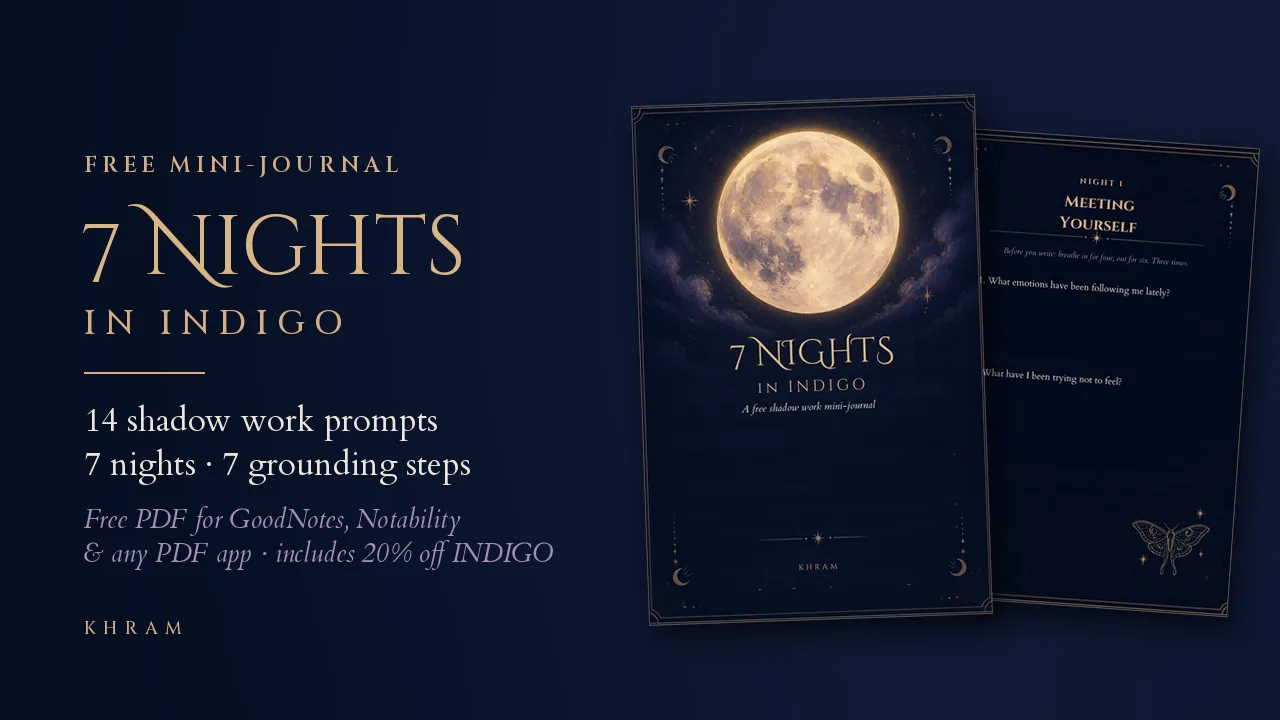
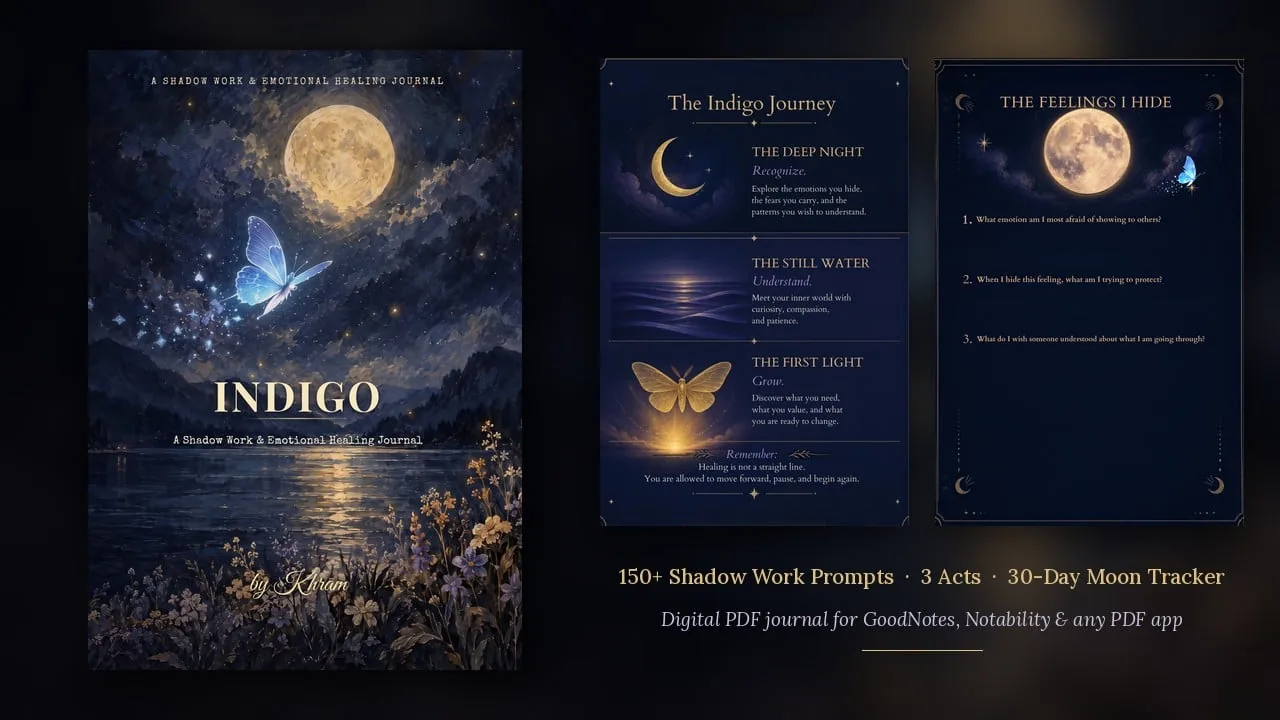
A list is a good start, but questions work better in a sequence. INDIGO has 150+ prompts in three Acts, from noticing to understanding to growing, with a full page to write on after each one and a 30-night moon tracker. If you'd like to try first, 7 Nights in INDIGO is free.
Khram journals and guides are self-reflection tools, not a substitute for professional mental health care. If you are in crisis or thinking about hurting yourself, call or text 988 in the US, contact your local emergency number, or find a helpline at findahelpline.com (opens in a new tab).
Sources
- Jung, C. G. (1959). Aion: Researches into the Phenomenology of the Self. Collected Works, Vol. 9, Part II. Princeton University Press.
Keep reading

Getting started
Shadow Work Journal for Beginners: How to Start Gently
What shadow work is, how to start journaling about it safely, a simple 10-minute routine, 12 beginner prompts, and what to look for in a shadow work journal.
7 min read
Digital journaling
Digital Shadow Work Journal for iPad: GoodNotes & Notability Guide
Paper or digital? How to open a shadow work journal PDF in GoodNotes or Notability, pen colors that work on dark pages, finding your place, and keeping it private.
6 min read

Healing journals
Emotional Healing Journal: What Writing Can (and Can't) Do
What 40 years of research says about writing through hard feelings, how to journal without spiraling, and when a journal isn't enough. Honest, no 30-day promises.
7 min read